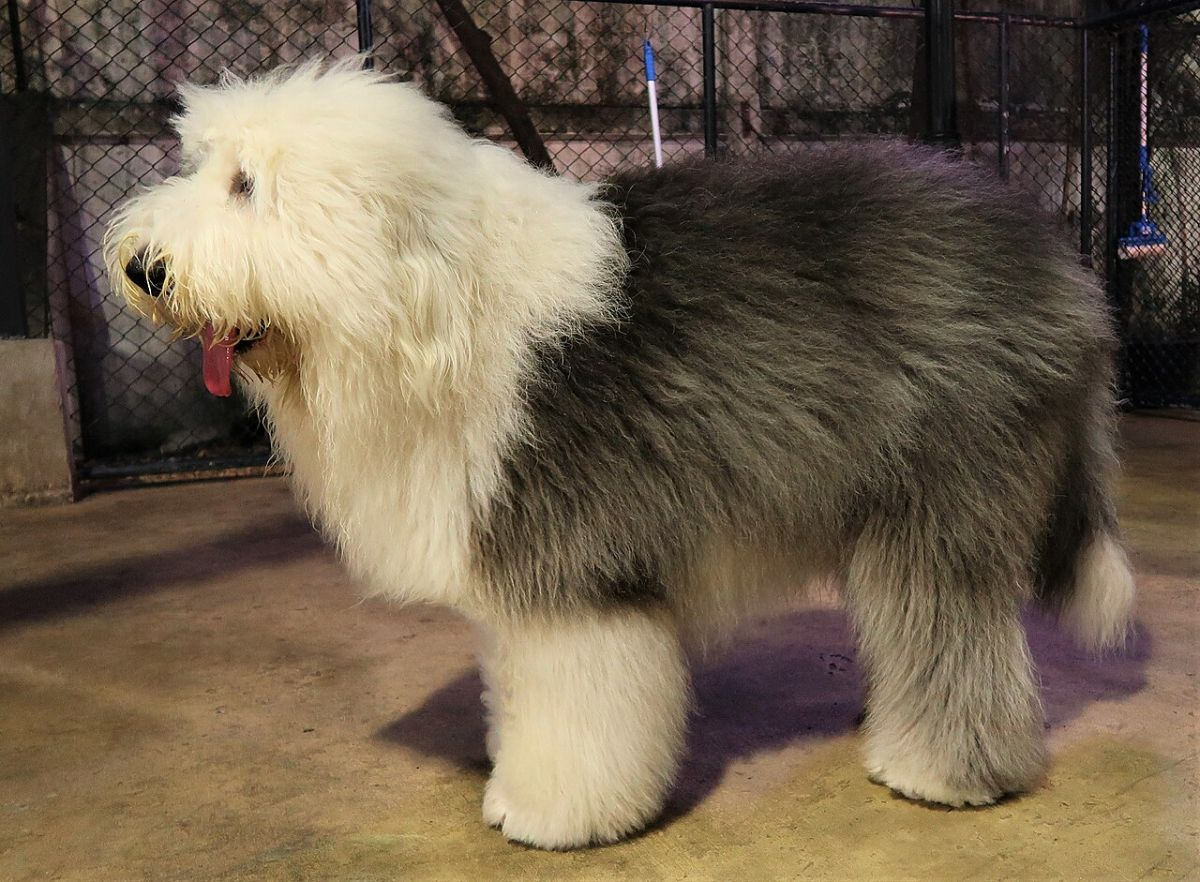
Photo: AKS.9955, via Wikimedia Commons, CC BY-SA 4.0
A sheep dog (or sheepdog) is any dog bred to work with sheep. Some sheepdogs herd the flock, moving sheep from field to field, while others guard it from predators. In everyday American English, though, “sheep dog” usually means one breed in particular: the big, shaggy Old English Sheepdog. This guide covers both: what a sheepdog is, the main types, and the best-known sheepdog breeds, so you can tell which one might suit your home.
What is a sheep dog?
“Sheepdog” is a job title more than a single breed. Farmers have used dogs to manage sheep for centuries, and different regions developed different dogs for the work. Today the word covers two quite different kinds of dog.
1. Herding sheepdogs
Herding dogs move and control the flock. They gather sheep, drive them where the shepherd wants and keep strays in line, often reacting to whistles or hand signals. They are usually quick, alert, highly trainable and full of energy. Well-known examples include the Border Collie, Shetland Sheepdog and Old English Sheepdog.
2. Livestock guardian dogs
Guardian dogs live with the flock and protect it from wolves, coyotes and other predators. They are generally large, calm, independent and protective, and they are not trained to move sheep. Examples include the Great Pyrenees, Anatolian Shepherd, Komondor and Kuvasz.
Kennel clubs group these dogs in different ways. The international kennel federation (FCI) places sheepdogs and cattle dogs together in its Group 1, while the American Kennel Club puts herding breeds in its Herding Group and most guardian breeds in its Working Group.
How do sheep dogs herd sheep?
Herding sheepdogs do not all work the same way. Breeds were shaped for different land, flocks and jobs, so shepherds usually describe four working styles:
- Gathering dogs with “eye”: dogs like the Border Collie circle wide around the flock, then crouch and stare at the sheep to control them. This intense stare is called “eye”.
- Heelers: short, quick dogs such as the Welsh Corgi and Australian Cattle Dog move stock from behind by nipping at their heels.
- Huntaways: New Zealand’s Huntaway uses its loud, deep bark to push sheep up steep hills and across big stations.
- Tending dogs: breeds such as the German Shepherd were bred to patrol the edge of a grazing flock like a living fence, keeping sheep out of crops.
Science backs up how clever this is. In a 2014 study, researchers from Swansea University and Uppsala University fitted a sheepdog and a flock with GPS backpacks. They found the dog followed just two simple rules: collect the sheep when they spread out, and drive them forward once they are bunched together. The study was published in the Journal of the Royal Society Interface.
Common sheepdog commands
Working sheepdogs respond to voice commands or whistles. These are the classic commands used by shepherds and in sheepdog trials:
| Command | What it means |
|---|---|
| Come bye | Circle the flock clockwise |
| Away to me | Circle the flock counterclockwise |
| Walk up | Move straight toward the sheep |
| Lie down (or Down) | Stop and drop to the ground |
| Stand or Stop | Stop moving but stay on your feet |
| Look back | Turn around and find sheep that were missed |
| That’ll do | Stop working and come back to the handler |
Shepherds test these skills in sheepdog trials, where a dog and handler must gather a small group of sheep, bring them through gates and pen them within a time limit. Trials are especially popular in the UK, Ireland, Australia, New Zealand and the United States.
The Old English Sheepdog: the “sheep dog” most people mean
If you picture a large dog with a thick grey-and-white coat covering its eyes, you are thinking of the Old English Sheepdog. It is the breed most Americans mean when they say “sheep dog.”
Old English Sheepdog quick facts
| Trait | Old English Sheepdog |
|---|---|
| Height | About 21–22 inches (males taller) |
| Weight | About 60–100 pounds |
| Lifespan | About 10–12 years |
| Breed group | Herding (AKC recognized the breed in 1888) |
| Coat | Long, shaggy double coat |
| Grooming | Very high: brushing most days |
| Exercise | About 45–60 minutes a day |
History
The breed developed in the English countryside around the 18th century, when farmers needed strong dogs to drive cattle and sheep to market. Its thick double coat protected it from rain and brambles while it worked.
Temperament
Old English Sheepdogs are known for being playful, affectionate and people-focused, with a clownish sense of humor. They usually bond with the whole family and are patient with respectful children. Their herding instinct means some will nudge or “herd” kids and other pets, so early training helps. They are intelligent and sensitive, and they respond best to gentle, consistent training rather than harsh correction.
Grooming
That famous coat is a real commitment. Plan to brush thoroughly most days to prevent mats, book a professional groom every few weeks, and keep the hair around the eyes and mouth trimmed. They shed heavily in spring and fall. If you want a low-maintenance dog, this is not the breed for you.
Exercise and living space
Expect roughly 45–60 minutes of walks, play and brain games each day. They enjoy variety, such as hiking, fetch or obedience games, more than long runs. Because of their size, they are happiest in a home with some space, though a well-exercised Old English Sheepdog is usually calm indoors.
Other popular sheepdog breeds
Border Collie
Often called the best sheep-herding dog in the world, the Border Collie was developed on the border between England and Scotland. It stands about 18–22 inches tall, weighs about 30–55 pounds and usually lives 12–15 years. Border Collies are extremely intelligent and energetic and need one to two hours of activity a day, plus mental work. They thrive with active owners and can become restless in a quiet home.
Shetland Sheepdog (Sheltie)
The Sheltie comes from the Shetland Islands of Scotland, where it herded sheep, ponies and poultry. At about 13–16 inches and 15–25 pounds, it is the smallest breed here, with a lifespan of about 12–14 years. Shelties are friendly, playful and eager to please, though often reserved with strangers at first. They can be quite vocal.
Great Pyrenees (guardian type)
The Great Pyrenees is a livestock guardian, not a herder. It is a giant breed, about 25–32 inches tall and 85–100+ pounds, with a lifespan of about 10–12 years. Calm and devoted with family, it is naturally wary of strangers and quite independent, which can make training harder. Many bark at night, which is what they were bred to do.
Australian Shepherd
Despite the name, the Australian Shepherd was developed on ranches in the western United States, though its ancestors likely came through Australia with imported sheep. Many people search for it as the “Australian sheep dog”. Aussies stand about 18 to 23 inches tall and weigh 40 to 65 pounds. They are smart, energetic and loyal, and they need a lot of exercise and a job to do.
Australian Kelpie
The Kelpie is Australia’s own sheepdog, famous for running across the backs of tightly packed sheep to reach the front of the flock. It is a lean, tireless worker of about 17 to 20 inches and best suits farms or very active homes.
German Shepherd
The German Shepherd started as a sheep herding dog in Germany in the late 1800s before becoming a police, military and service dog. It still has the tending instinct to patrol and protect. Males usually stand 24 to 26 inches and weigh 65 to 90 pounds.
Bearded Collie
The Bearded Collie is a shaggy Scottish herder that looks a little like a smaller, slimmer Old English Sheepdog. It is bouncy, friendly and full of energy, and its long coat needs weekly brushing.
Pembroke Welsh Corgi
Corgis are small heelers that herded cattle and sheep in Wales. Low to the ground, they could nip heels and duck under kicks. They are bold, clever and more active than their short legs suggest.
Puli and Pumi
Hungary produced two small curly herders. The Puli is known for its long corded coat that looks like dreadlocks, while the Pumi has a curly coat and upright ears with tipped ends. Both are lively, vocal and smart.
Komondor (guardian type)
The Komondor is a large Hungarian livestock guardian with a white corded coat that helps it blend in with the flock. Like other guardians, it is calm with its family and very protective of its sheep.
Sheepdog breeds compared
| Breed | Type | Height | Weight | Lifespan |
|---|---|---|---|---|
| Old English Sheepdog | Herding | 21–22 in | 60–100 lb | 10–12 yrs |
| Border Collie | Herding | 18–22 in | 30–55 lb | 12–15 yrs |
| Shetland Sheepdog | Herding | 13–16 in | 15–25 lb | 12–14 yrs |
| Great Pyrenees | Guardian | 25–32 in | 85–100+ lb | 10–12 yrs |
Sheepdog breeds list
Here is a quick list of the best-known sheepdog breeds and the job each was bred for.
| Breed | Origin | Type |
|---|---|---|
| Border Collie | Scotland and England | Herding (gathering) |
| Old English Sheepdog | England | Herding (droving) |
| Shetland Sheepdog | Scotland | Herding |
| Bearded Collie | Scotland | Herding |
| Rough Collie | Scotland | Herding |
| Australian Shepherd | United States | Herding |
| Australian Kelpie | Australia | Herding |
| New Zealand Huntaway | New Zealand | Herding (barking) |
| German Shepherd | Germany | Herding (tending) |
| Belgian Sheepdog | Belgium | Herding |
| Pembroke Welsh Corgi | Wales | Herding (heeling) |
| Puli | Hungary | Herding |
| Pumi | Hungary | Herding |
| Great Pyrenees | France and Spain | Livestock guardian |
| Anatolian Shepherd | Turkey | Livestock guardian |
| Komondor | Hungary | Livestock guardian |
| Kuvasz | Hungary | Livestock guardian |
Fun fact: the Rough Collie on this list is the breed behind Lassie, one of the most famous dogs in film history.
Is a sheep dog right for you?
Sheepdogs can make wonderful companions, but they were bred to work, and they bring that drive home with them.
A sheepdog may suit you if you…
- have time for daily exercise and training
- enjoy an intelligent dog that learns quickly
- are happy to brush and groom regularly (especially for long-coated breeds)
- want a loyal, family-focused dog
Think twice if you…
- are away from home most of the day
- want a dog that needs little exercise
- live somewhere a barking or herding dog would cause problems
- are not ready for heavy shedding
Curious how old a dog is in human years? Try our free Dog Age Calculator.
Frequently asked questions
Are sheepdogs good family dogs?
Many are. Old English Sheepdogs and Shelties are known for being affectionate and good with respectful children. Herding breeds may try to herd kids by nudging or nipping, so training and supervision matter, especially with young children.
Is a sheepdog the same as a shepherd dog?
The terms overlap. “Shepherd dog” is often used for the same group of herding and guarding dogs, and several breeds, such as the German Shepherd and Anatolian Shepherd, carry “shepherd” in their names.
Do Old English Sheepdogs shed a lot?
Yes. They have a thick double coat and shed heavily in spring and fall. Regular brushing keeps loose hair and mats under control.
How big does an Old English Sheepdog get?
Adults are usually about 21–22 inches tall at the shoulder and weigh about 60–100 pounds, with males larger than females.
What is the smartest sheepdog breed?
The Border Collie is widely considered the most intelligent and capable herding breed, which is also why it needs so much exercise and mental work.
What does a sheep dog look like?
There is no single look. Most people picture the Old English Sheepdog, a large, shaggy gray and white dog with hair over its eyes. Herding sheepdogs such as the Border Collie are usually medium-sized, athletic dogs with a double coat, while guardian sheepdogs are often big and white so shepherds can tell them apart from wolves.
Is the Old English Sheepdog the same as an English sheepdog?
Yes. “English sheepdog” is a common shortened name for the Old English Sheepdog.
What dog herds sheep best?
The Border Collie is the most widely used working sheepdog in the world and dominates sheepdog trials, thanks to its intelligence, stamina and strong herding “eye”.
Leave a Reply